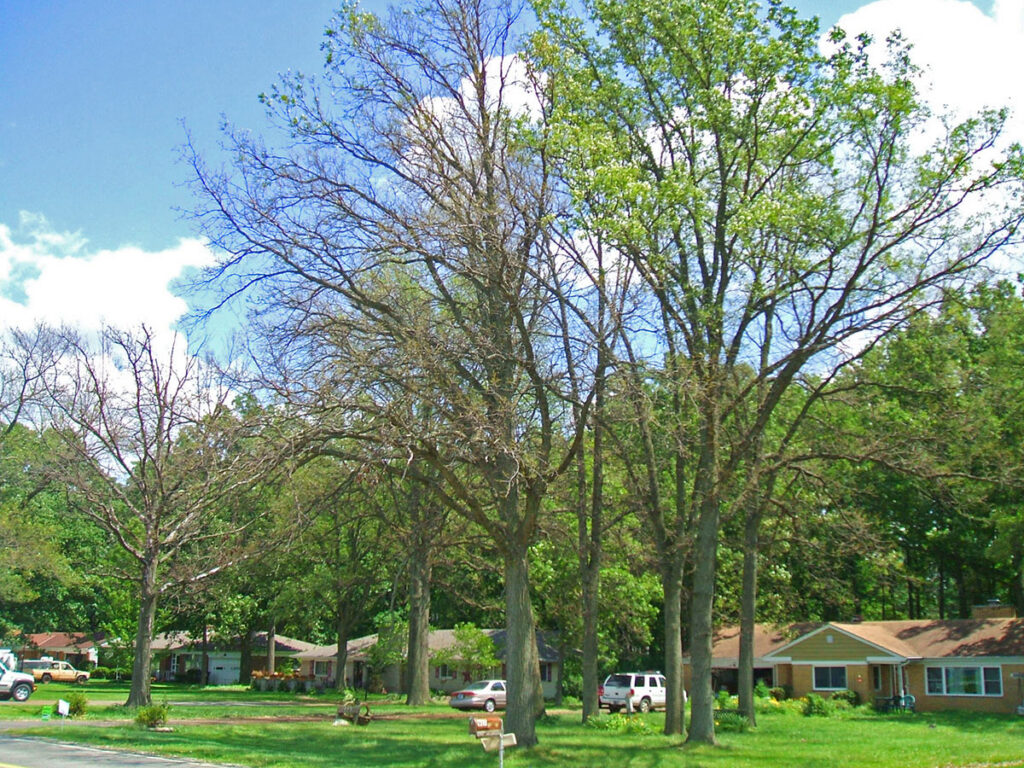
Why are oaks stressed?
Every oak is on the decline spiral; the only question is: where are they on it?
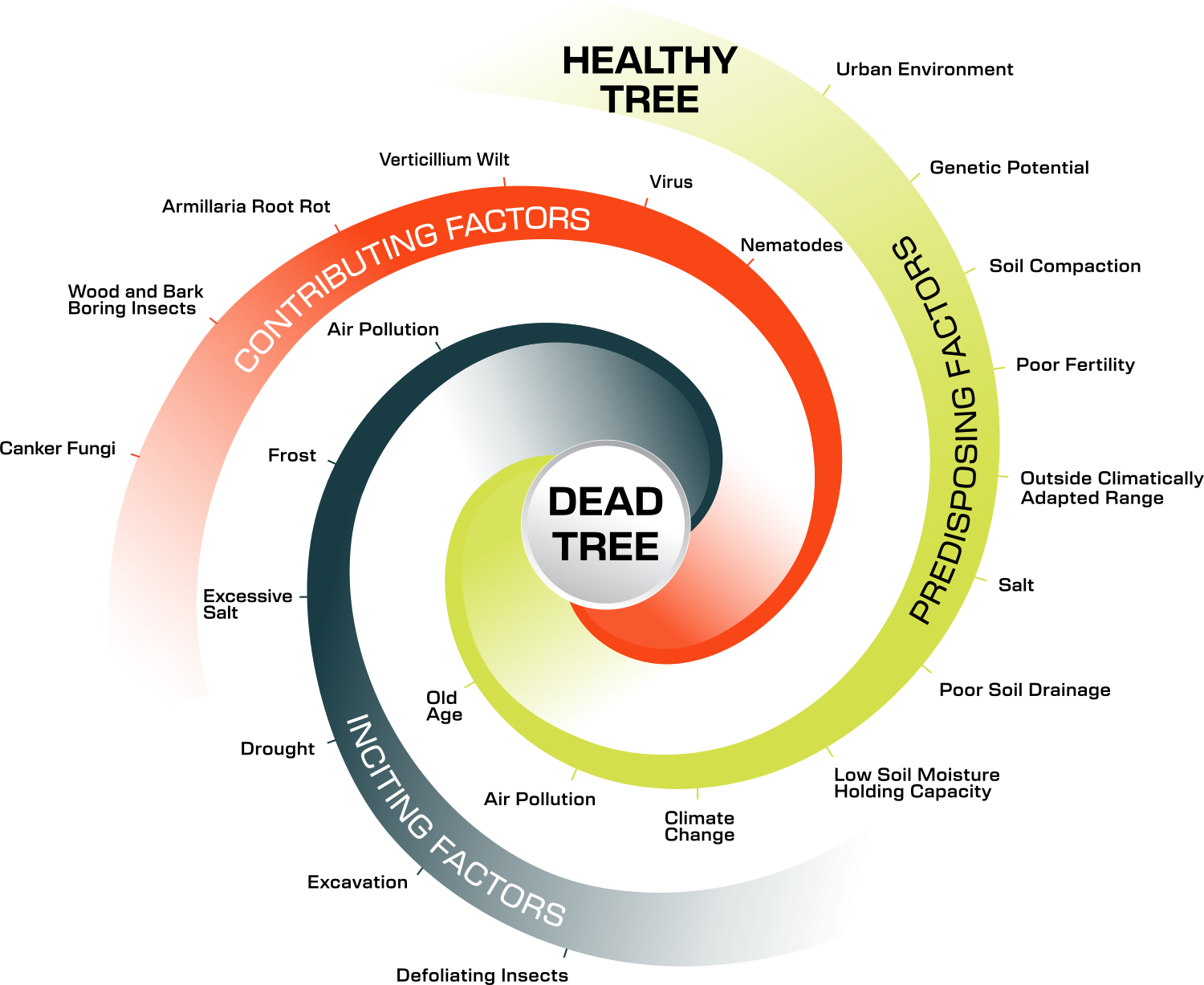
The concept of “oak decline” is not a single issue but a syndrome resulting from cumulative stress. Mature oaks often succumb to a downward spiral driven by a combination of predisposing, inciting, and contributing factors.
Predisposing Factors
Long-term, non-reversible factors that establish a baseline level of stress, lowering the tree’s defensive capacity.
Site Factors
Trees planted in non-native or restrictive root zone environments face inherent challenges: poor drainage, chronically high or low pH, and inadequate soil volume.
Maturity
As part of natural senescence, an oak’s natural defense systems become less efficient as they age past their peak vigor.
Poor Adaptation
Many established oaks, especially those in urban centers, are not genetically suited to the current environmental conditions they face, a discrepancy that is amplified by climate change.
Inciting Factors
Short-term, acute events that trigger a sharp drop in the tree’s energy reserves and initiate the visible decline.
Weather Extremes
Too much rain, not enough rain, and extreme high and low temperatures force the tree to spend energy on survival rather than defense.
Construction Damage
Root cutting, soil grade changes, or heavy equipment traffic severely damage roots and compact the soil, immediately compromising water and nutrient uptake.
Defoliation Events
Severe, repeated defoliation by insects such as caterpillars force the tree to expend massive energy reserves on re-leafing, leaving it severely depleted.
Contributing Factors
A weakened tree becomes a target for opportunistic pests and pathogens, which are often the final cause of death.
Secondary Pests
Many secondary pests are attracted to stressed oaks. If unprotected, they can cause rapid dieback, leading to tree mortality within just a few years.
Canker Diseases
Weakened trees are susceptible to infection by canker diseases. Many of these pathogens live unnoticed within the tree until stress activates them to damage vascular tissue, driving further decline.
Vascular Diseases
Vascular issues can be fatal in many situations. Even infections that do not result in mortality directly can leave a tree seriously stressed and susceptible to further decline.
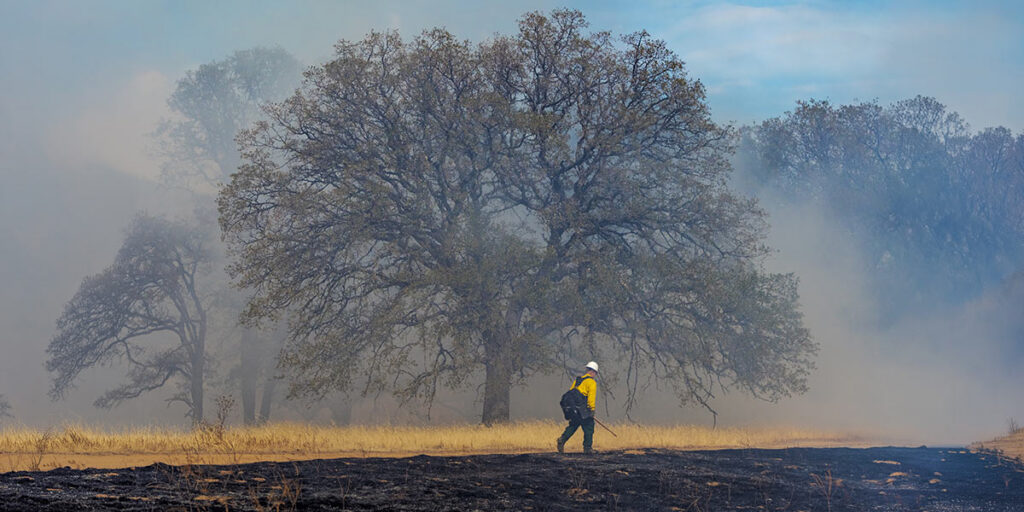
The Challenges of a Changing World
Oaks in natural forests and savannahs face broad environmental stresses. Rapid climate change manifesting as hotter, colder, wetter, or drier extremes exposes oaks to conditions outside their adapted ecological niche. This increased stress weakens the tree’s natural defenses, making it more susceptible to secondary attackers.
Urban and residential oaks face unnatural stressors: restricted root zones, compacted soils, altered water tables, and mechanical injuries. These factors weaken the tree over time, pushing it further along the decline spiral and making it a target for opportunistic pests and diseases.
Oak trees have spent millions of years adapting to specific environmental conditions and gradual changes. Now they are planted in a world that is much different and changing much faster than they are accustomed to. For them to continue to thrive despite these challenges, oaks need you.